Outdoor Wedding Venues in Worcestershire: How to Choose, Plan, and Personalise Your Perfect Outdoor Wedding
There's a reason couples across Worcestershire are searching for outdoor wedding venues in record numbers.
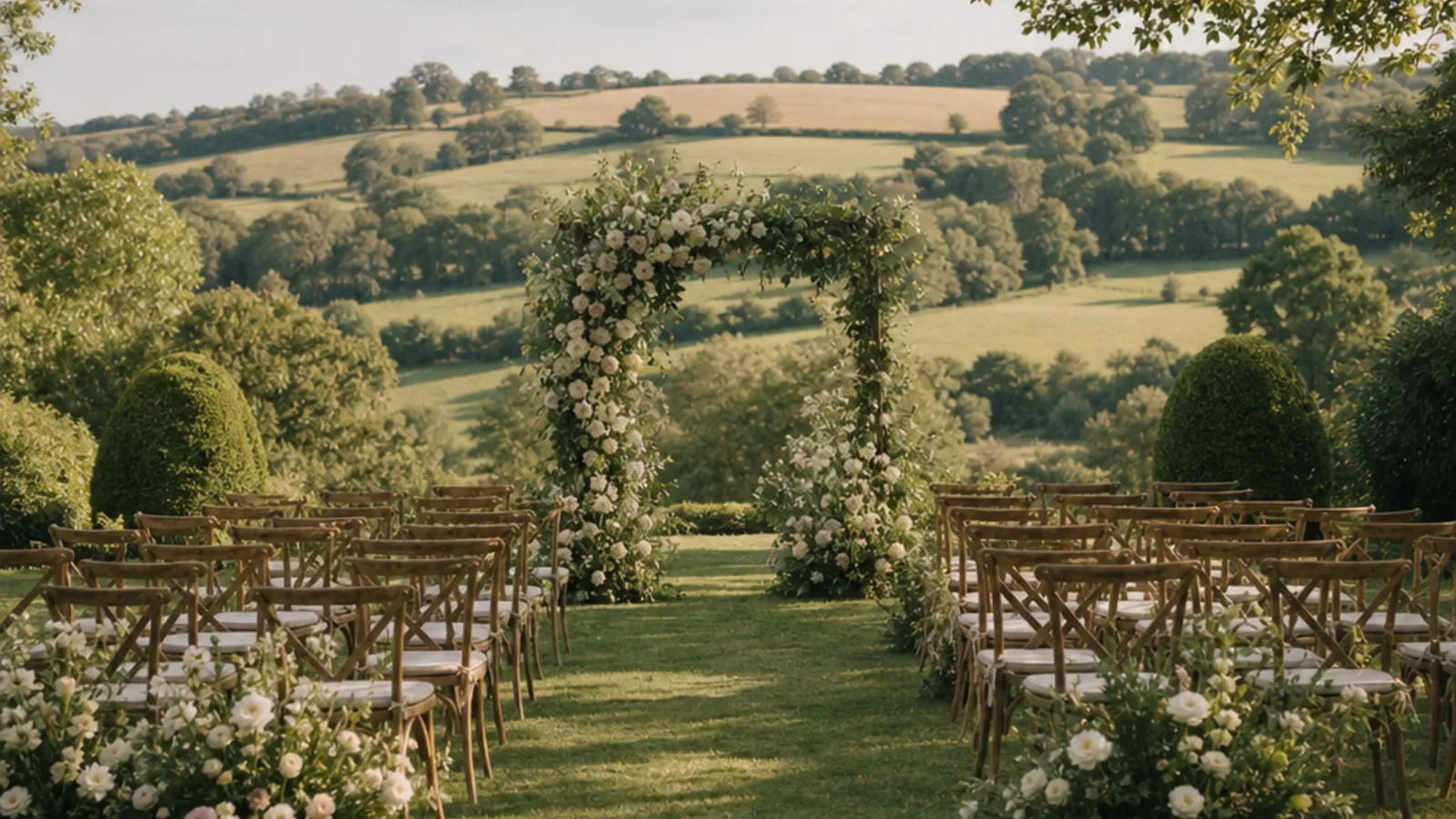
There's a reason couples across Worcestershire are searching for outdoor wedding venues in record numbers. The combination of open skies, natural scenery, and that unmistakable sense of freedom makes an outdoor celebration feel fundamentally different from any ballroom or function room. From the Malvern Hills to the orchards of the Vale of Evesham and the banks of the Severn and the Avon, the county is full of beautiful places to say "I do" in the open air. But choosing the right venue, understanding the licensing rules, and weather-proofing your special day takes genuine planning. This guide walks you through every decision, from venue types and legalities to budgeting and seasonal timelines, and includes the Worcestershire venues that offer outdoor ceremonies.
Key Takeaways
- An outdoor wedding venue can be anything from a private woodland glade or walled garden to a manor house lawn, working farm meadow, or lakeside tipi site. In Worcestershire, outdoor weddings are held in gardens, woodlands, orchards, meadows, and beside rivers and lakes.
- Couples should prioritise licensing for the outdoor ceremony, guest capacity, weather back-up plans, and whether the venue offers exclusive hire or exclusive use.
- The best outdoor wedding venues balance natural beauty with practical facilities: power, toilets, parking, accessibility, and local accommodation nearby.
- Outdoor wedding venues provide stunning natural backdrops for ceremonies, often creating a more relaxed and casual atmosphere for guests.
- This guide covers real Worcestershire venues licensed for outdoor ceremonies, typical 2026 pricing ranges, and FAQs that aren't answered elsewhere in the article.
What Counts as an Outdoor Wedding Venue in 2026?
An outdoor wedding venue is any location where the main ceremony, drinks reception, or wedding breakfast takes place in an outdoor space, such as gardens, woodlands, courtyards, wildflower meadows, lakesides, or riverbanks. The key distinction is between an "outdoor wedding", where most of the day unfolds outdoors, and simply holding an outdoor ceremony at a venue that's otherwise fully indoors.
Examples range widely across Worcestershire. You might picture a moated manor house such as Birtsmorton Court with a sheltered garden and a beautiful backdrop of the Malvern Hills, a rustic farm like Elmbridge Farm with a tipi pitched beside a lake, the walled gardens of The Commandery in the heart of Worcester, or a riverside garden on the Avon at The Angel in Pershore.
Many venues market themselves as "outdoor" but are actually licensed indoors and styled to feel open air: glasshouses, orangeries, and covered terraces are popular with couples worried about British weather. When you're researching, terms like outdoor space, outdoor ceremony, outdoor venues, and stunning outdoor wedding venues all describe slightly different offerings. Understanding the distinction saves hours of wasted enquiries.
Types of Outdoor Wedding Venues (Gardens, Woodlands, Farms, Riversides & More)
Before you start contacting venues, think about which backdrop speaks to you as a couple. The setting drives everything: decor, photography style, logistics, and guest experience. Here are the main categories, with Worcestershire examples of each.
Garden wedding venues remain among the most sought-after. Classic English gardens with lawns, rose borders, and fountains offer a refined ceremony space. An enclosed garden, intimate and sheltered from the wind, is especially popular. Birtsmorton Court near Malvern offers its White Garden as an intimate, sheltered ceremony space, while Bank House Hotel at Bransford has a landscaped garden fully licensed for outdoor ceremonies with views towards the Malvern Hills. Bennetts Willow Barn, just outside Worcester, has a rose-covered pergola for up to 100 guests.
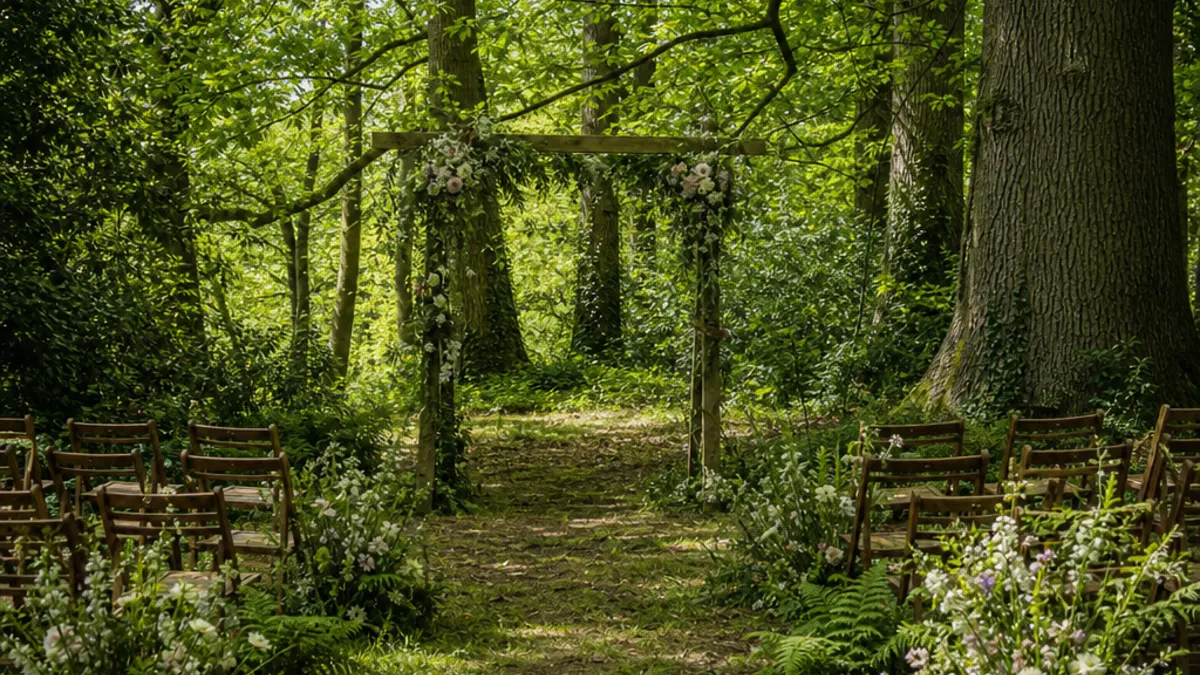
Woodland venues deliver an entirely different feel: dappled light through the canopy, fairy light installations, and festival-style clearings. Elmbridge Farm near Droitwich has a licensed woodland clearing for up to 150 guests, and Barns & Yard at Hanley Castle offers a woodland glade as one of its ceremony settings. The Dodford Inn near Bromsgrove has hosted ceremonies in its wooded grounds across six acres.
Manor house and country estate venues often provide the wow factor of a historic house with terraces, a courtyard, and sweeping parkland. Manor Hill House at Upton Warren offers a Lawn Pavilion, a Barn Courtyard, and Park Meadow, which is ringed by woodland. Hagley Hall sits within 300 acres of parkland, and Deer Park Hall at Eckington is licensed for both indoor and outdoor ceremonies, with a lawn and an Oak Pavilion. A manor house typically offers both an outdoor ceremony on the lawn and indoor dining in a grand room, which gives you useful flexibility.
Farm, meadow, barn, and tipi venues are the blank-canvas choice: fields, lakefronts, and wildflower meadows fitted with tipis, stretch tents, or marquees for cover. Curradine Barns at Shrawley has a licensed Garden Gazebo seating up to 150, Flower Field Barn near Pershore holds ceremonies on the lawn in front of the barn, and Redhouse Barn at Stoke Prior offers outdoor ceremonies in its landscaped gardens. A working farm setting adds rustic character, while meadow venues surrounded by nature let the landscape do the styling.
Riverside and lakeside venues are Worcestershire's answer to the coast. The Angel Hotel in Pershore has a Riverside Garden overlooking the River Avon and its own orchards, Sankey Marine in Evesham has a riverside Summer House, and The Holt Fleet at Holt Heath hosts ceremonies on its private riverside patio. For lakes, Stanbrook Abbey at Callow End has a private garden overlooking Willow Lake, and Barns & Yard offers ceremonies on the shores of its private lake. Water makes for wonderful wedding photographs, although it's worth asking about paths, safety, and midges on summer evenings.
City outdoor venues include courtyards and walled gardens in Worcester itself. These are easily accessible for guests travelling by train and offer an outdoor wedding feel within the city centre. The Commandery's walled gardens can host an outdoor ceremony, and Greyfriars' House and Garden, a National Trust townhouse, pairs a ceremony in its Great Hall with a drinks reception in the walled garden, keeping everyone close to hotels and transport.
Worcestershire Venues Licensed for Outdoor Ceremonies
We checked every venue on Worcestershire County Council's list of approved ceremony venues, along with other popular wedding venues across the county. The venues below state on their own websites that they offer outdoor ceremonies. Capacities and spaces were correct at the time of writing (September 2026), so always confirm the exact licensed area and guest numbers when you enquire.
Curradine Barns, Shrawley
A popular barn venue near Worcester with a Garden Gazebo that is licensed for civil ceremonies and seats up to 150 guests. If the weather turns, the ceremony can move into the Granary Barn, which seats 118.
Deer Park Hall, Eckington, near Pershore
Licensed for both indoor and outdoor civil ceremonies for up to 150 guests. Outdoor options include Lambs Leap Lawn, the Oak Pavilion, and a heated Lower Pavilion, with the Bredon Room or Panelled Hall available as indoor alternatives.
Manor Hill House, Upton Warren, near Bromsgrove
An exclusive-use country house with three outdoor ceremony settings: the Lawn Pavilion (up to 150), the Barn Courtyard (up to 140), and Park Meadow (up to 150). Wet-weather options include the Manor Marquee, the Drawing Room, and the Summer Room.
Old Rectory House, Ipsley, Redditch
A Grade II listed Georgian country house licensed for civil ceremonies both indoors and outdoors. The Garden Pavilion and the Festival Field stretch tent each hold up to 150 guests, with the Victorian Orangery and Lavender Barn as indoor alternatives.
Elmbridge Farm, near Droitwich
A farm venue with two fully licensed outdoor ceremony locations: a lakeside setting and a woodland clearing, each for up to 150 guests. Receptions take place in a lakeside tipi.
Flower Field Barn, Wick, near Pershore
Offers both indoor and outdoor civil ceremonies, on the lawn in front of the barn or on the patio and courtyard, for up to 100 guests.
Stanbrook Abbey, Callow End
A country house hotel with a private garden overlooking Willow Lake, licensed for up to 200 guests. The Callow Great Hall or St Anne's Hall, whose doors open onto the garden, provide a wet-weather alternative.
The Wood Norton, Evesham
A country house hotel on the edge of the Cotswolds with a lawn pavilion licensed for up to 120 guests. Outdoor ceremonies can also take place in the gardens and on the terrace, with indoor rooms and an orangery available if the weather turns.
Bank House Hotel, Spa & Golf Club, Bransford
The landscaped garden, terrace, and grounds are fully licensed for outdoor ceremonies, with views across to the Malvern Hills. Indoor suites include Malvern View and the Elgar Suite.
The Angel Hotel, Pershore
A historic coaching inn whose Riverside Garden overlooks the River Avon and the hotel's own orchards, with space for up to 300 guests. An all-weather garden marquee provides cover.
West Midland Safari Park (Spring Grove House), Bewdley
A Georgian house within the safari park, with landscaped gardens offering spaces for outdoor ceremonies. The site has indoor and outdoor ceremony spaces for up to 300 guests, with Spring Grove House seating 150.
Kings Norton Golf Club (Weatheroak Hall), Alvechurch
A Grade II listed house set in 220 acres, with lawns, a lake, and a courtyard for outdoor ceremonies. The Brockhill Suite, for up to 200, is available indoors.
The Holt Fleet, Holt Heath
A riverside pub and restaurant offering outdoor-style ceremonies on its private riverside patio, with indoor rooms and a function suite for up to 150 as alternatives.
Redhouse Barn, Stoke Prior, near Bromsgrove
A barn venue offering outdoor ceremonies in its landscaped gardens, with the barn itself as the indoor alternative.
More Worcestershire venues with outdoor ceremony options
These venues are listed by wedding directories or local suppliers as offering outdoor ceremonies. Ask each one to confirm which outdoor area is covered by its licence.
- Birtsmorton Court, near Malvern: the White Garden and the Terrace, for up to 200 guests, at this moated manor house.
- Barns & Yard, Hanley Castle: the lake shore, a woodland glade, or the landscaped courtyard, with the Threshing Barn or Cartshed as indoor alternatives.
- Bennetts Willow Barn, Lower Wick, Worcester: a rose-covered pergola for up to 100, with the barn or a yurt marquee as a back-up.
- Hogarths Stone Manor, Kidderminster: an outdoor Pump Room in the formal gardens for up to 120, set in 30 acres of grounds.
- Sankey Marine (The Boathouse), Evesham: a riverside Summer House, with an indoor ceremony room as the alternative.
- Hagley Hall, Hagley: outdoor ceremonies within 300 acres of parkland, alongside the church and state rooms.
- The Commandery, Worcester: walled gardens in the city centre, with an indoor space reserved in case of bad weather.
- The Dodford Inn, Dodford: an exclusive-use country inn with a ceremony archway and wooded grounds.
- The Manor at Abberley, Abberley: a terrace with countryside views for up to 70 guests.
- Arley House and Gardens, Upper Arley: ceremonies on the lawn when the weather allows, plus a walled Italian Garden.
- Bordesley Park, Beoley: outdoor ceremonies for up to 120, with the Tudor Barn or a clearspan marquee as back-up.
- The Pear Tree Inn and Country Hotel, Smite: landscaped gardens used for outdoor ceremonies.
- Avoncroft Museum of Historic Buildings, Bromsgrove: a tree-lined lawn surrounded by historic buildings for up to 120. Check whether this area is licensed for legal ceremonies or used for blessings.
Licensing & Legalities for Outdoor Ceremonies in Worcestershire
The rules changed significantly when outdoor civil weddings and civil partnerships were made permanent in England and Wales in March 2022. Civil ceremonies at approved premises can now take place entirely outdoors, in the grounds of the licensed building. Worcestershire County Council puts it simply: a legal ceremony can take place at a register office, an approved venue, or an outdoor area within an approved venue.
Many venues hold the legal ceremony in a licensed structure, such as a gazebo, pavilion, pergola, or summer house, while guests sit on the surrounding lawn. Curradine Barns' Garden Gazebo, Manor Hill House's Lawn Pavilion, and Old Rectory House's Garden Pavilion are good examples in Worcestershire. If your preferred outdoor spot isn't part of the approved premises, the legal signing typically happens separately at a register office, with a celebrant-led or humanist ceremony held at your chosen location. Worcestershire venues such as The Firs near Bromsgrove and Oakfield Gardens at Claines offer beautiful outdoor settings but aren't licensed, so they suit exactly this approach.
The Law Commission's wedding law reform project recommended moving away from venue-based licensing towards officiant-based regulation, which could eventually allow weddings in parks, on riverbanks, and on private land. As of mid-2026, the government is actively consulting on these changes.
Practical steps before you book:
- Confirm the venue is on Worcestershire County Council's list of approved ceremony venues
- Ask whether the exact outdoor spot you want is covered by the licence
- Check maximum guest numbers for the licensed ceremony space
- Contact Worcestershire Registration Service about registrar fees and availability for your date
- If you're planning a celebrant-led ceremony, book your legal ceremony at a register office separately
Guest Numbers, Layout & Accessibility in Outdoor Spaces
Matching the outdoor space to your guest list is one of the first practical decisions. Couples should consider venue size for guest capacity carefully: too large a space feels empty, and too small feels cramped.
Typical capacity bands look like this:
| Wedding Size | Guest Count | Suited Venue Types |
|---|---|---|
| Elopement / micro | 2-10 | Small walled gardens, private woodland |
| Intimate | 20-50 | Boutique garden venues, courtyard spaces |
| Mid-size | 60-120 | Estate lawns, barns with grounds, lakeside tipis |
| Large | 150-300+ | Marquees on private land, large estates, meadow venues |
In Worcestershire, Flower Field Barn and Bennetts Willow Barn suit weddings of around 100, The Wood Norton's lawn pavilion and Hogarths Stone Manor's Pump Room hold up to 120, and Curradine Barns, Deer Park Hall, Manor Hill House, Old Rectory House, and Elmbridge Farm all cater for around 150. For larger celebrations, Stanbrook Abbey's garden holds 200 and The Angel's Riverside Garden up to 300.
The average UK wedding in 2026 hosts around 74-80 day guests, and most mid-range outdoor venues are designed for exactly that number. Outdoor venues typically allow for more flexible layouts than indoor venues, so you can adjust seating, bar placement, and food stations to suit your group.
Layout planning matters. Orient the ceremony so guests aren't staring into low evening sun. Position bars and street food vans on the lawn where they're visible but don't block sight lines. Keep games and children's areas within earshot but not directly behind the registrar.
Accessibility is a crucial consideration for outdoor wedding venues. Ensure solid paths exist for wheelchair users, consider golf buggies for elderly guests at larger venues, and check that lighting is adequate for evening departures. Always check for proper toilet facilities at outdoor venues. Luxury portable loos have come a long way, but verify what's included in the hire.
Weather-Proofing Your Outdoor Wedding
British weather does not negotiate. A June heatwave can be followed by a wet weekend, and outdoor wedding venues often require contingency plans for weather. Every outdoor wedding needs a Plan B, and ideally a Plan C.
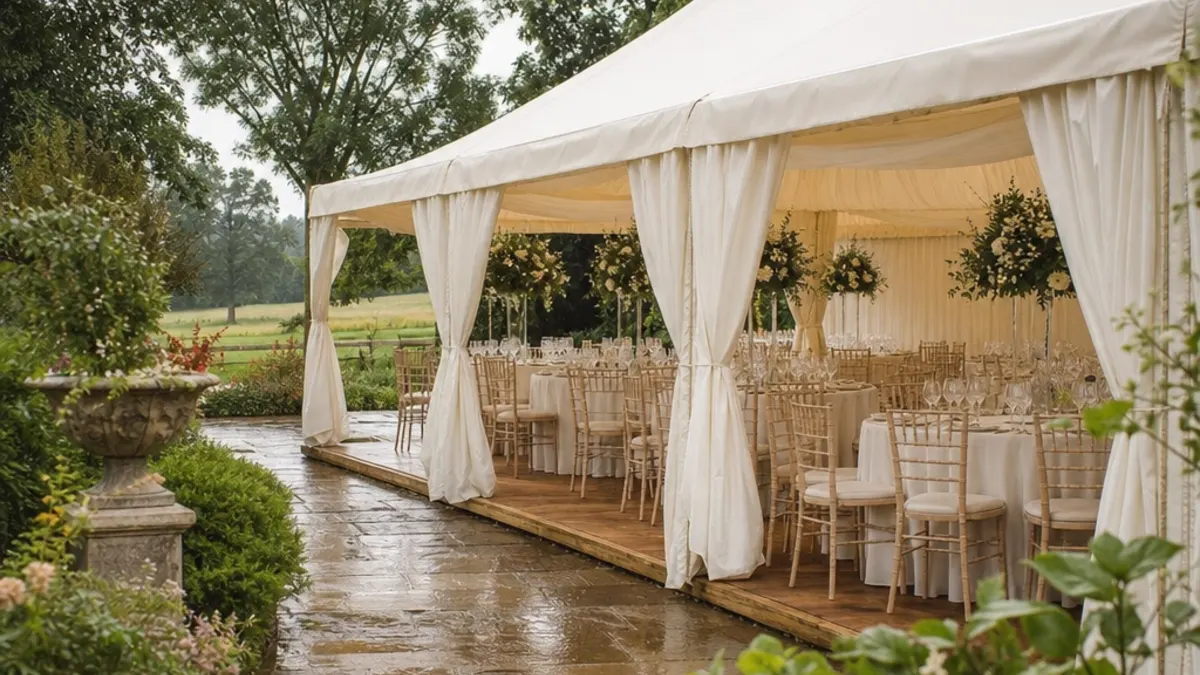
Common weather-proofing options include on-site barns, clearspan marquees, tipis, orangeries, and covered terraces that can host either the ceremony or the reception at short notice. Weather contingencies are essential for outdoor weddings regardless of the month you choose. Many Worcestershire venues build this in: The Angel in Pershore has an all-weather garden marquee, Curradine Barns can move ceremonies into the Granary Barn, Stanbrook Abbey has the Callow Great Hall, and The Commandery's garden hire includes an indoor space reserved in case of bad weather.
Agree with the venue by what time on the day (or the day before) the final call is made about moving indoors. Most venues set a midday deadline on the wedding day itself.
Practical touches to consider:
- Baskets of blankets for April and October celebrations
- Parasols or fans for July heat
- Umbrellas at entrances
- Clear communication on invitations about outdoor dress codes
Checking terrain conditions is important for guest comfort at outdoor venues. Ask how the lawn copes after several days of rain, whether paths become muddy, and whether temporary flooring or matting is available to protect dresses and shoes. This is especially worth asking at riverside venues on the Severn and the Avon, where low-lying ground can be affected after heavy rain.
Exclusive Hire vs Shared Venues: Privacy, Noise & Timings
Exclusive hire, or exclusive use, means you and your guests are the only event on site for your wedding date, often from morning until midnight or across a full weekend. Many outdoor venues offer exclusive hire for privacy, and it's worth paying for if you want total freedom over outdoor spaces.
The benefits of exclusive-use outdoor venues are significant: privacy for photographs, relaxed timings for the outdoor ceremony, and the ability to use multiple zones, such as a ceremony in the walled garden, drinks on the lawn, and late-night firepits in the meadow. In Worcestershire, Manor Hill House, Birtsmorton Court, and The Dodford Inn all offer exclusive use. Exclusive-use venues often require a minimum two-night stay, bundling accommodation into the package.
Non-exclusive venues, such as hotels and public gardens, may have overlapping foot traffic, restricted time slots, and sound limitations. Many outdoor venues have specific restrictions on sound and music, so always ask what time amplified music must finish outdoors versus inside a barn or room.
Questions to ask:
- Which outdoor spaces are included in the hire?
- Are neighbouring fields or paths public?
- What time must outdoor music end?
- Is accommodation included for the wedding party?
Exclusive hire often costs more up front but can represent strong value if it includes 20-30 bedrooms for close family on site.
Budgeting for an Outdoor Wedding Venue
Outdoor wedding venue pricing in 2026 varies enormously by region, season, and what's included. Here are the realistic numbers.
The average outdoor wedding venue hire fee is £1,800 per day for basic field-and-facilities hire, but the average garden or outdoor venue hire rises to around £6,319 when you factor in mid-range and premium sites. Combined venue and catering spend averages approximately £10,484, with a cost per head of around £188. Venue pricing varies based on size and services offered.
| Venue Type | Typical Hire | All-In Estimate (80 guests, peak Saturday) |
|---|---|---|
| Stately home with grounds | £8,900-£9,000 | £25,000-£40,000 |
| Country house / estate | ~£7,400 | £22,000-£35,000 |
| Barn with outdoor space | ~£6,300 | £16,000-£28,000 |
| Hotel with garden | ~£5,150 | £14,000-£24,000 |
| Pub/restaurant garden | ~£2,400 | £6,000-£14,000 |
Additional costs to budget separately:
- Marquee or tipi hire: £3,000-£10,000+. Some venues charge additional fees for marquee hire on top of the site hire.
- Generators, luxury loos, lighting, and temporary flooring
- Catering per head: typically £70-£130 for a sit-down dinner
- Accommodation and guest travel for rural locations
Ways to save: weekday or Sunday weddings, shoulder-season dates in April, May, September, and October, and shorter hire windows for a small outdoor ceremony only. All-inclusive packages can reduce overall wedding costs compared to dry hire, where hidden extras add up. Always request itemised quotes that separate outdoor space hire, equipment, catering, and accommodation so you can compare different venues fairly.
Decor, Styling & Logistics in Open-Air Settings
Here's the good news: natural scenery often reduces the need for additional decorations. A beautiful outdoor wedding venue with mature trees, rolling lawns, or a lakeside setting does much of the styling work for you. Natural light enhances photography during outdoor weddings, giving you stunning wedding photographs without heavy artificial lighting.
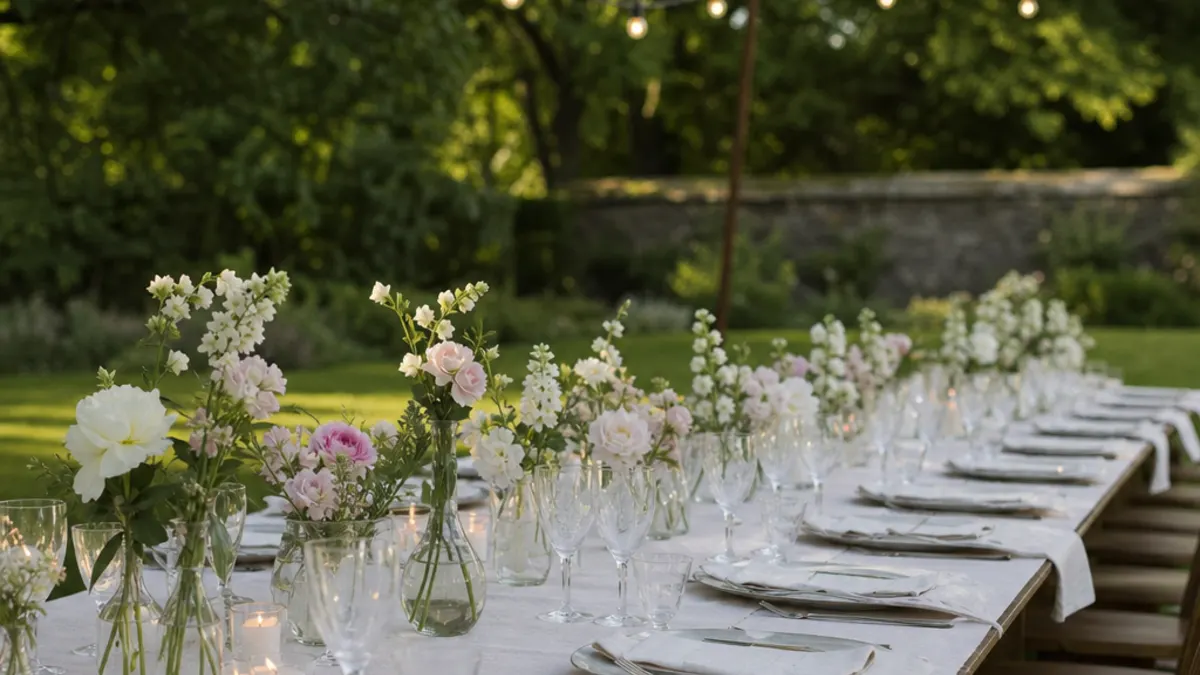
For a garden wedding, consider seasonal flowers in bud vases, lanterns along pathways, and meadow-style aisle arrangements. Woodland settings suit hanging installations, rustic signage, and cross-back chairs. In Worcestershire, orchard settings such as The Angel's Riverside Garden in Pershore suit blossom in spring and apples and pears in autumn. Keep it simple: the backdrop is the decoration.
On the logistics side, plan where to run power for fairy lights and bands, how to hide generators behind hedging or outbuildings, and how delivery vehicles will access the site without damaging lawns. Zone large outdoor spaces so the day flows naturally: a ceremony zone, a drinks lawn, a shaded area for older guests, a children's play corner, and a clearly marked outdoor bar for the party later.
Consider environmental choices too: biodegradable confetti, minimal single-use plastics, and working with venues that actively protect their woodlands, meadows, and surrounding nature.
How to Shortlist & Visit the Best Outdoor Wedding Venues
Online research is only the first step. Couples should visit their top three to five venues in person, ideally in the same season they plan to marry.
A step-by-step shortlist process:
- Filter by area of Worcestershire: the Malvern Hills, the Vale of Evesham and Pershore, Worcester and the Severn Valley, the Wyre Forest and Bewdley, or Bromsgrove and Redditch in the north of the county
- Narrow by guest numbers, budget, and whether a legal outdoor ceremony on site is essential
- Check whether the venue offers exclusive hire or shared use
- Book show-rounds, ideally on a day when another event is set up so you can see the grounds in action
Key questions to ask on tours:
- What are the back-up plans if it rains?
- Where does the sun set, and where is the best spot for photographs?
- Where do guests park, and is it easily accessible?
- How late can people remain outdoors in the evening?
- What accommodation is available on site or nearby?
Imagine real scenarios on your visit: where you'll get ready with your groom or bridal party, how guests will move from the ceremony to the drinks reception, and where elderly relatives can sit in the shade. Visit at least one garden venue, one woodland or meadow venue, and one country house or barn so you can compare very different outdoor spaces before deciding. For example, you could compare the walled gardens of The Commandery, the lakeside and woodland at Elmbridge Farm, and the Lawn Pavilion at Manor Hill House. Every love story starts differently, and the perfect setting for yours might surprise you.
Realistic Outdoor Wedding Timelines by Season
Season and daylight hours shape the ideal flow of your wedding day. Here's how to plan by season.
Spring (April-May): Ceremonies work best at 1-2pm to avoid chilly evenings. Factor in marquee heating for the reception. Use blossom and fresh greens in your garden wedding decor, and make the most of the Vale of Evesham's orchards in blossom. Expect sunset around 8-8:30pm.
Summer (June-August): Later ceremony times (3pm) avoid peak midday heat and give you extended outdoor drinks receptions and al fresco dining. With sunset after 9pm, there's generous time for photographs in golden hour. This is peak season, so book early.
Autumn (September-early October): Early afternoon ceremonies (1:30-2pm) catch warm light before it fades. Plan to move into a barn, tent, or indoor room for dinner as temperatures drop. Embrace the seasonal colours in your outdoor spaces: amber, burgundy, and gold.
Always check exact local sunset times and build in 20-30 minutes of uninterrupted outdoor photography during golden hour. Natural light enhances every frame, and the right timing makes the difference between good and extraordinary wedding photographs.
FAQs about Outdoor Wedding Venues in Worcestershire
Can you get legally married outdoors in Worcestershire?
Yes. Since March 2022, civil weddings and civil partnerships in England can take place outdoors in the grounds of an approved venue. Worcestershire County Council confirms that legal ceremonies can take place at a register office, an approved venue, or an outdoor area within an approved venue. If your chosen outdoor spot isn't licensed, you can hold a celebrant-led ceremony there and complete the legal formalities separately at a register office.
Which Worcestershire wedding venues are licensed for outdoor ceremonies?
Venues offering outdoor ceremonies include Curradine Barns (Shrawley), Deer Park Hall (Eckington), Manor Hill House (Upton Warren), Old Rectory House (Redditch), Elmbridge Farm (near Droitwich), Flower Field Barn (near Pershore), Stanbrook Abbey (Callow End), The Wood Norton (Evesham), Bank House Hotel (Bransford), The Angel Hotel (Pershore), West Midland Safari Park's Spring Grove House (Bewdley), Kings Norton Golf Club (Alvechurch), The Holt Fleet (Holt Heath), and Redhouse Barn (Stoke Prior). Always check which outdoor area is covered by the licence when you enquire.
How far in advance should we book an outdoor wedding venue?
Popular outdoor wedding venues, especially those offering exclusive use and weekend hire, often book 18-24 months ahead for peak Saturdays between May and September. Weekday dates and shoulder-season months like April and October may still be available 9-12 months out, making them solid options for couples planning on a shorter timeline.
Can we have both the ceremony and reception fully outdoors?
Many couples now hold the legal or symbolic outdoor ceremony, drinks reception, and even the wedding breakfast outside. However, British weather and local licensing rules usually mean you need some form of covered space. Even when everything is planned outdoors, venues and registrars generally insist on a weather-safe alternative, such as a barn, orangery, pavilion, tipi, or marquee, on standby.
Are there noise or music restrictions at outdoor wedding venues?
Many rural and village locations must follow local council rules and agreements with neighbours, which can limit amplified outdoor music to certain hours, typically finishing by 11 pm outside, with later options indoors. Ask specifically about DJ and band set-ups, any sound limiters fitted on site, and whether fireworks or sparklers are permitted.
What should guests wear to an outdoor wedding?
Invitations should clearly state "outdoor wedding" and mention the terrain, such as lawn, woodland, or riverside, so guests can choose appropriate footwear and layers. A practical note such as "heels may sink on grass; wedges or block heels recommended" goes a long way. Consider providing blankets, parasols, or flip-flops depending on the summer heat or autumn chill.
Can we bring our dog to an outdoor venue?
Many farms, barns, and woodland venues are dog-friendly for outdoor ceremonies and photographs, but historic houses and manicured gardens may restrict pets to certain areas. Ask in advance about pet policies, lead requirements, and any extra cleaning charges. Nominate a trusted friend or a professional pet-chaperone service to look after your dog during the celebrations so you can enjoy the day without worry.